
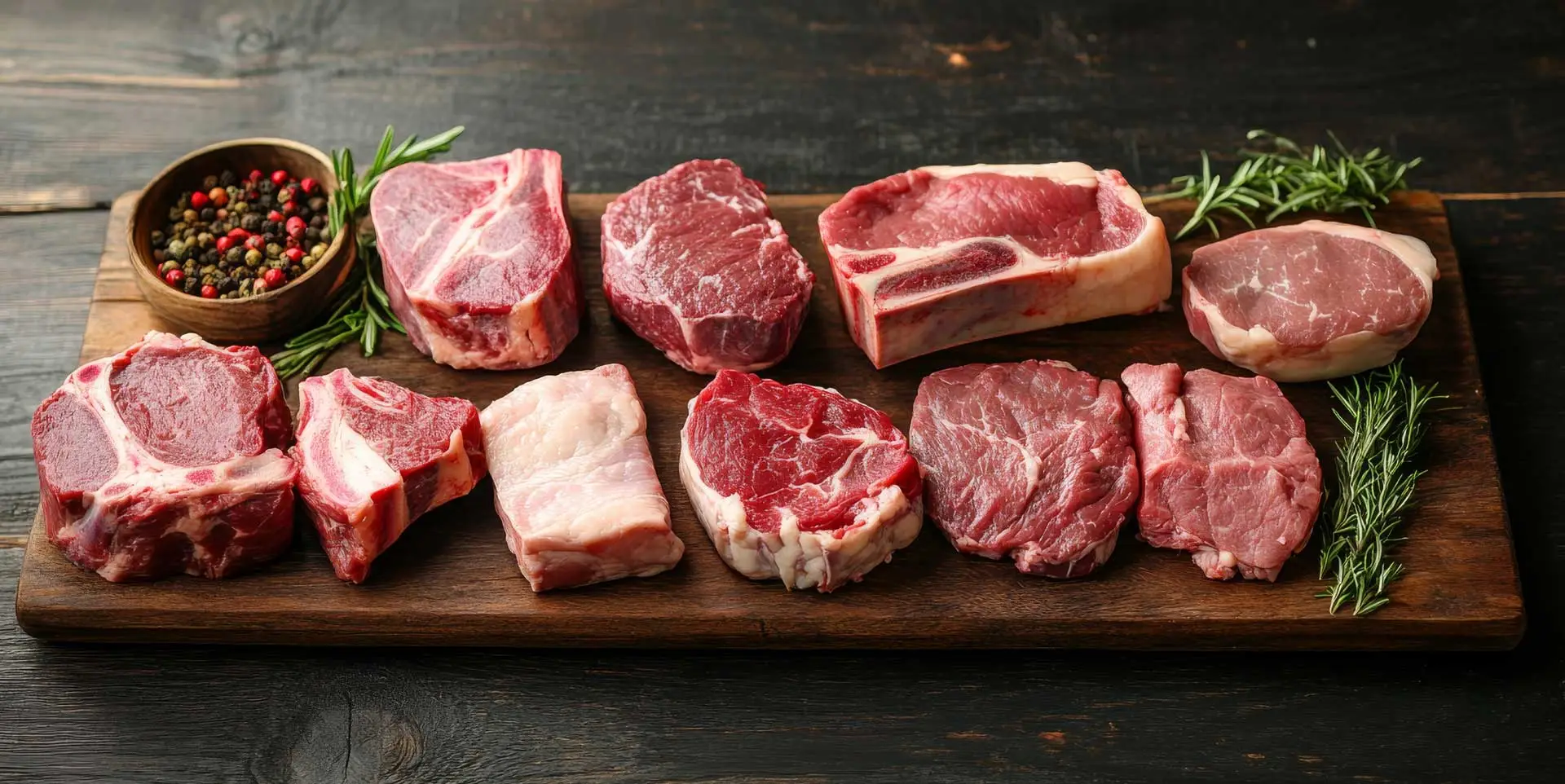
Not every beef cut is right for every dish, but when you know what to look for, choosing the best cut of beef gets easier. Whether you’re firing up the grill or planning a slow Sunday roast, it starts with high quality beef cuts from producers you can trust.
At Beverly Creek, we raise and butcher all-natural Ontario beef, with both grass-fed and grain-finished options available. From tenderloin to brisket, this guide breaks down beef cuts Ontario home cooks and chefs rely on, and how to cook each one for flavour, texture, and satisfaction.
What’s the Best Cut of Beef?
The best cut depends on what you’re cooking, how you’re cooking it, and what kind of texture and flavour you’re after. Here’s a quick breakdown to help you:
What are the best beef cuts for grilling?
For flavour and tenderness on the grill, you can’t go wrong with ribeye, striploin, or top sirloin. These cuts are naturally tender and hold up well to high heat. If you want something leaner but still grill-worthy, flank and skirt steak both work beautifully when marinated and sliced thin.
What’s the difference between ribeye and striploin?
Both are premium grilling steaks, but the texture and fat content set them apart. Ribeye has more marbling and a rounder, richer flavour. It’s juicy and forgiving, even if slightly overcooked. Striploin (also called New York strip) is leaner, with a firmer bite and a clean, beef-forward flavour. Both are cut from the loin and deliver a high-end steak experience.
Which cuts are best for slow cooking?
Look to the tougher, more marbled cuts like chuck, brisket, shank, and round. These sections have connective tissue that breaks down with time and moisture, turning into tender, flavour-packed meals. Think stews, braises, and slow roasts that fill the house with good smells.
Different Types of Beef Cuts Explained
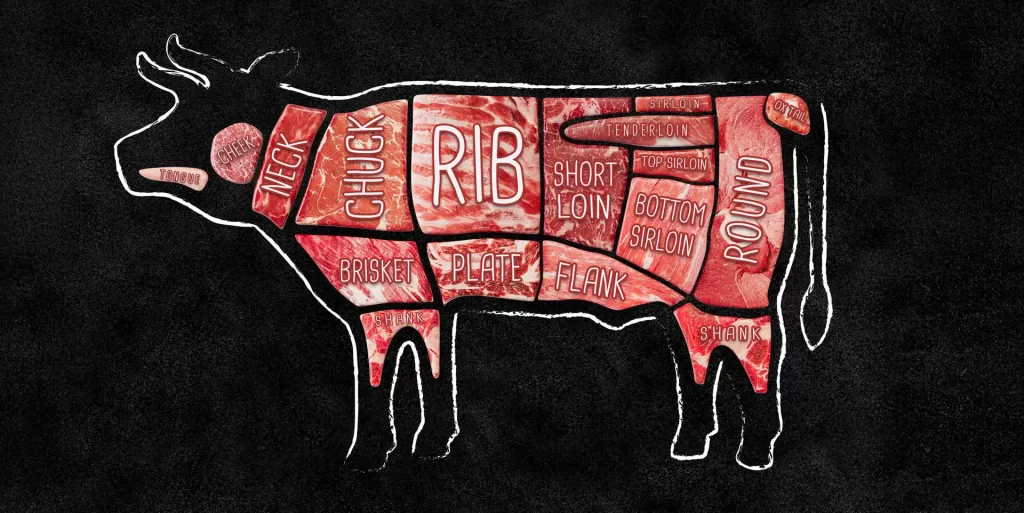
Beef starts with what butchers call primal cuts – the large sections first separated from a whole carcass. Each primal has its own characteristics, from rich, marbled rib cuts to lean, structured rounds.
At Beverly Creek, we cut and portion beef in-house, offering flexibility for wholesale customers and confidence for home cooks looking to get it right. Here’s a breakdown of the most popular beef cuts in Canada and how to get the most out of them.
- Chuck (Shoulder): Located at the front of the animal, chuck is known for deep flavour thanks to its marbling and connective tissue. These are working muscles, so cuts from the chuck benefit from slow, moist cooking. Think: braises, stews, or classic pot roasts.
- Rib: Home to some of the most popular steaks, like ribeye and prime rib. Rib cuts strike a beautiful balance between tenderness and rich, beefy flavour, perfect for dry-heat cooking methods like grilling or roasting.
- Loin (Short Loin + Top Sirloin): One of the most tender areas, the loin is split into two main sections. Known for their fine texture, the short loin includes strip loin and tenderloin. The top sirloin, just behind it, is still tender but a little leaner, and ideal for grilling.
- Round (Hip): This large, lean section from the rear leg offers cuts like top round, sirloin tip, and eye of round. They’re flavourful but firm, best handled with roasting, marinating, or slicing thin after slow cooking.
- Shank: Taken from the lower leg, the shank is full of connective tissue and flavour. It shines when cooked low and slow, perfect for soups, stews, or osso buco.
- Brisket: A hardworking muscle from the front chest, brisket is dense and well-suited to long, slow cooking. Whether you’re braising, smoking, or slow-roasting, it rewards patience with big flavour and tenderness.
- Plate: Located below the rib, the plate offers richly marbled cuts like short ribs and skirt steak. It’s a bit tougher in texture, but full of character. Great for marinades and high-heat searing.
- Flank: Leaner and long-grained, the flank comes from the abdominal area. It’s often used in stir-fries or fajitas, and should always be sliced thin against the grain for tenderness.
How to Carve Beef Like a Pro
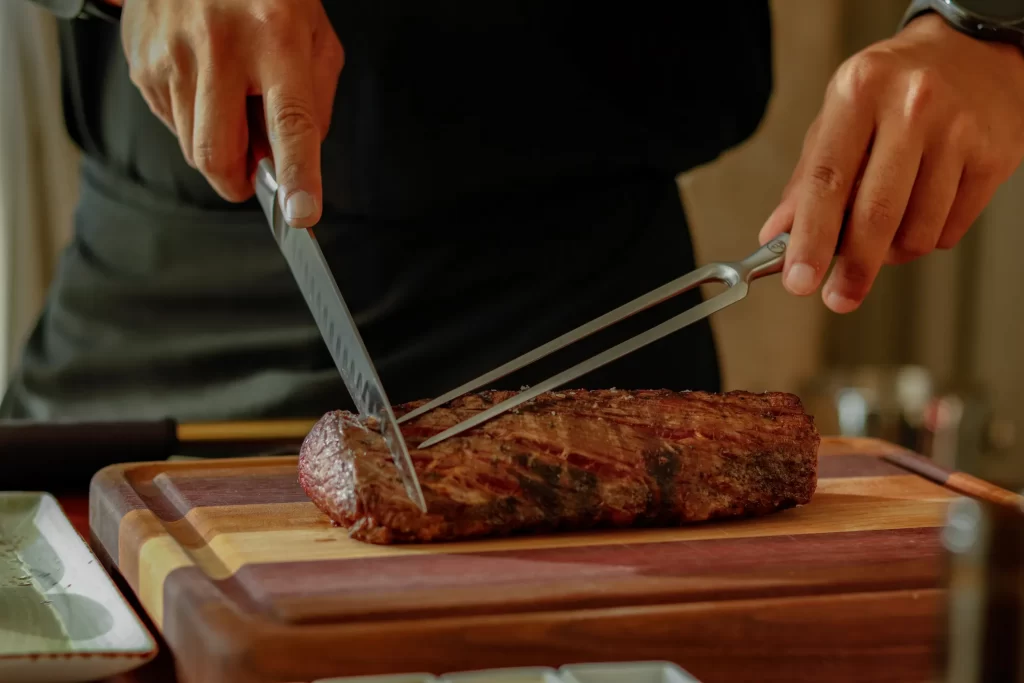
Good beef deserves a good finish. Whether you’ve roasted a whole brisket or grilled a top sirloin, carving it properly makes all the difference.
Here’s how to do it right:
- Let it rest. Once the beef comes off the heat, cover it loosely with foil and let it sit for 10 to 15 minutes. This helps the juices settle instead of spilling out on the board.
- Keep your board steady. Set your cutting board on a damp cloth or non-slip mat so it doesn’t slide around while you work.
- Use the right knife. A long, sharp carving knife (not a serrated one) will give you clean, even slices. No need to press hard, let the blade do the work.
- Slice against the grain. This shortens the muscle fibres and gives you a more tender bite, especially on leaner cuts like flank or round.
- Catch the juice. If your board doesn’t have a groove, place it over a rimmed baking sheet to catch the drippings. Don’t toss them – those juices are full of flavour and make a great addition to pan sauces or gravy!
Ready to Choose Your Cut?
By now, you’ve got a better handle on what each cut offers – and how to make it shine in your kitchen. Whether you’re after a few steaks for the weekend or prepping for a slow roast next Sunday, we’re here to make sure you get the right cut, trimmed and packed with care.
Order online now, and we’ll have your beef ready for pickup at the farm. It’s a simple way to get high-quality, all-natural Ontario beef, straight from the source.
Got questions about cuts, cooking, or custom orders? Get in touch, we’re always happy to help.