
Premium Ontario Beef
Feed your family the best local Ontario beef. Ethically raised at Beverly Creek Farms, our all natural beef comes from Red and Black Angus cattle that are grain-fed and finished on a mix of homegrown grains and pasture forage, producing the rich marbling and tenderness Angus is known for.
Our cattle are ethically raised with space to move, careful handling, and close attention from the people who manage the land and feed. Keeping the process close to home helps us maintain consistent quality from pasture to processing.
Whether you’re serving a whole prime rib roast or a tomahawk ribeye steak, the result is well-marbled beef that cooks evenly and delivers full flavour. Trusted by Ontario families, chefs, and butchers for its consistent quality and traceable farm origins.
We also offer halal beef, prepared to meet halal requirements while maintaining the same standards we apply across our farm.
-

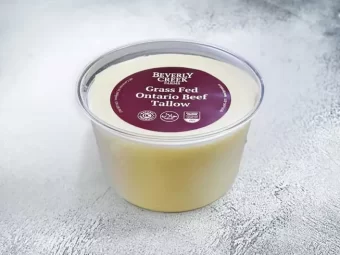
Grass-Fed Ontario Beef Tallow
Our grass-fed beef tallow is rendered in-house from Ontario pasture-raised cattle, creating a clean, stable...
$12.00 CAD Buy
FAQs
Beef is nutrient-rich because it is one of the best sources of iron, vitamin B12, zinc, selenium, and carnitine. It is a complete protein that contains all nine essential amino acids. The growing interest in high-protein, nutrient-dense diets reflects what real nutrition science has always known: high-quality beef is healthy.
The standard of the beef you get completely depends on the way in which the cattle are reared. Beef from animals fed on pasture has a different nutritional composition than ordinary beef.
Cattle that are treated well and finished with care yield meat that is more flavourful, has better texture, and is superior in every way. The beef you get from Beverly Creek comes from animals reared this way on our farm in Ontario, where we control every step of the process. That’s the kind of beef worth feeding your family. To learn more about how we measure the quality of our beef, read our guide to meat-grading.
It depends on the cut and how the animal was finished. Sirloin, tenderloin, and lean ground beef are naturally lean. Ribeye and short ribs carry more marbling. Our grass-fed beef tends to be leaner overall than grain-finished, with fat that’s higher in omega-3s and CLA. If you’re looking for lean beef, grass-fed is the better choice. If you’d like some help choosing the right cuts for your order, feel free to ask us.
A 3.5 oz serving of cooked beef contains roughly 25–27g of protein, depending on the cut. Beef is a highly bioavailable protein source, so your body absorbs and uses it efficiently. This makes beef one of the most efficient ways to get the protein your body needs.
Beef is classified as red meat, which is simply a reflection of its myoglobin content, the protein that makes it red. Red meat is nutrient-dense in ways white meat isn’t, which is why athletes and people following high-protein diets prize it.
Beef does contain dietary cholesterol, but research shows it’s far less influential on blood cholesterol than previously believed. Fat composition matters more than cholesterol content. Our grass-fed beef has a different fat profile than grain-finished beef, with higher omega-3 levels, which many people prefer.
Our naturally raised beef is full of flavour and needs little preparation. For steaks like ribeye or strip, salt well and sear in a hot pan. Let it develop a crust, then finish to your liking. For leaner cuts like sirloin, avoid overcooking to prevent drying out. Always rest for 5 minutes after cooking.
To preserve your beef, keep it refrigerated after pickup. Our vacuum-sealed beef stays fresh for 3–5 weeks if kept cold. Once opened, use it within 3–4 days. For longer storage, freeze it well-wrapped, and it keeps for several months. Thaw overnight in the fridge before consuming.
Tenderness depends on the beef quality, which depends on how the animals were raised. We raise ours on Ontario pasture with care and respect, so our beef is naturally tender and full of flavour.
For tougher cuts like chuck that benefit from slow cooking, braise or stew them for several hours until the meat collapses into the pan. This breaks down the muscle fibres and makes the meat tender. For naturally tender cuts like tenderloin or ribeye, do not overcook them. Let your beef rest for 5 minutes after cooking before cutting, and always slice against the grain.